
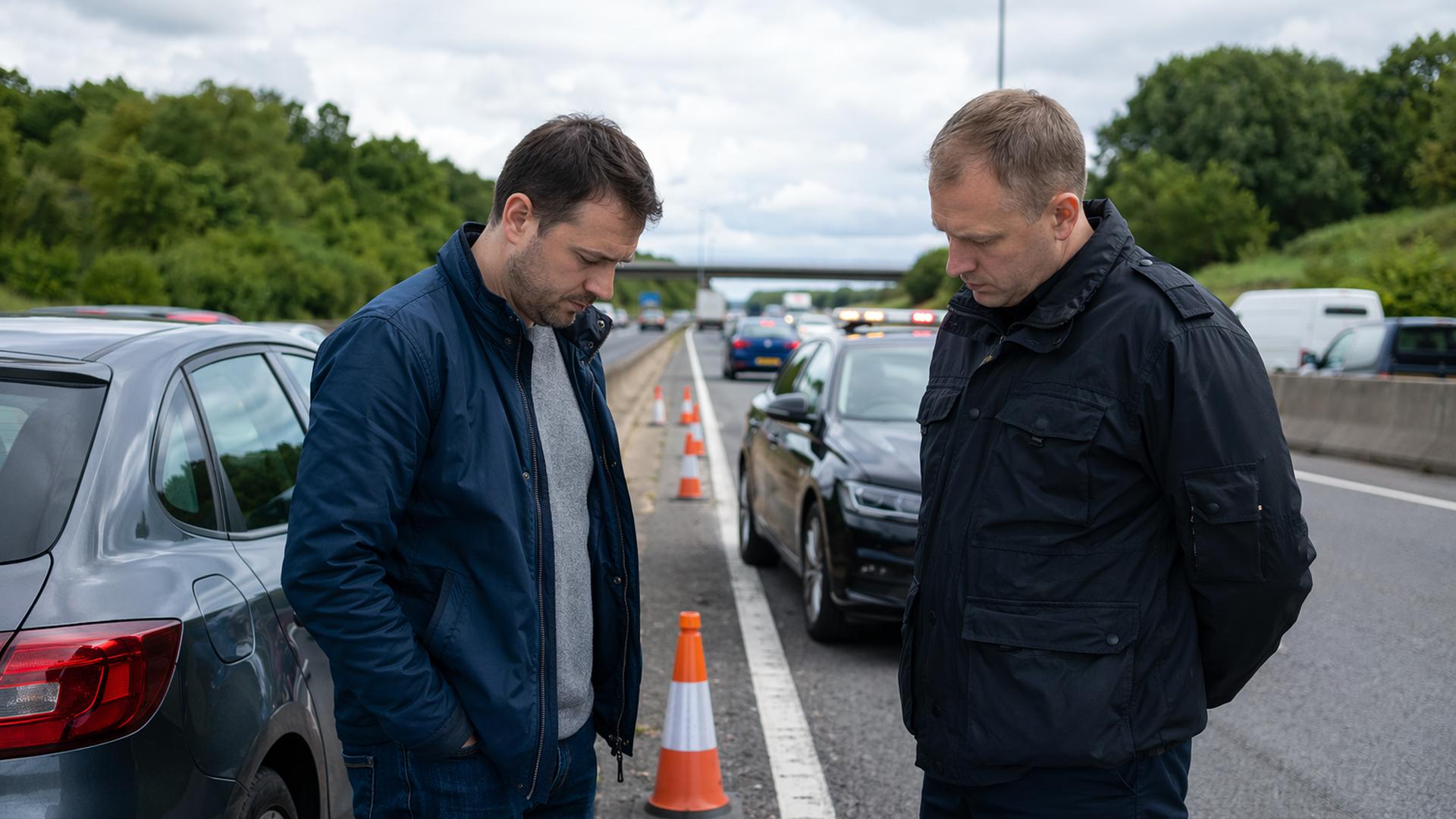
7 Key Consequences After Failing a Roadside Drug Test in the UK Explained
Published by Drug Driving Solicitors — specialist defence lawyers for drug driving charges across England and Wales.
Failing a roadside drug test is a disorienting experience, and for many drivers, the moments that follow raise far more questions than they answer. What happens next? Who is involved? How long does the process take? Understanding the stages that unfold after a positive roadside reading can help drivers approach the situation with greater clarity, whether they are seeking legal advice, supporting a family member, or simply trying to understand how the system works.
This article walks through the seven key stages of the drug driving process in England and Wales, from the moment a positive reading is recorded at the roadside all the way through to a potential hearing at court. Each stage is explained in straightforward terms, with enough legal context to give a full and accurate picture. Whether you have already been through part of this process or are reading ahead of an anticipated outcome, the information below is a practical guide to what lies ahead.
1. You Are Arrested and Taken to a Custody Suite
Once a positive roadside reading has been recorded and the procedural steps at the scene have been completed, a police officer has the power to arrest the driver and transport them to a police custody suite. This is a formal arrest under suspicion of a drug driving offence, and it marks the point at which the investigation moves from the roadside into an institutional setting. Being arrested does not mean a person will necessarily be charged, but it does trigger a set of rights and obligations that are important to understand.
At the custody suite, a custody sergeant will formally record the arrest, read the driver their rights, and explain what is happening at each stage. Drivers have the right to free independent legal advice, and exercising that right is strongly advisable regardless of the circumstances. A duty solicitor can be contacted before any samples are given or any questions are answered, and their involvement at this early stage can be significant.
The environment of a custody suite can feel overwhelming, particularly for drivers who have never encountered the criminal justice system before. It is worth knowing that the process at this stage is largely administrative and medical in nature. The driver is not being tried or convicted; they are simply being processed as part of an ongoing investigation, and the outcome remains uncertain at this point.
The length of time a driver spends in custody varies depending on a range of factors, including how quickly a healthcare professional is available to take a blood sample and whether any complications arise during the process. In most cases, the stay is measured in hours rather than days. Drivers who are released under investigation or on police bail will typically be allowed to leave once the necessary samples and procedures have been completed.
2. The Blood Sample Is Sent for Laboratory Analysis
After a blood sample has been taken at the custody suite, it does not remain with the police for assessment. The sample is packaged and dispatched to a forensic laboratory nominated by the relevant police force, where it undergoes detailed scientific analysis to identify any controlled drugs present and to measure their concentrations against the prescribed legal limits.
This stage is often the longest in the entire process. Laboratory turnaround times vary depending on the facility's current workload, the number of substances being tested for, and the complexity of the analysis required. It is not uncommon for this stage to take several weeks or even a few months, and drivers are sometimes left without any update for an extended period. That silence is not necessarily a cause for concern; it simply reflects the pace of forensic science rather than any development in the legal process.
The laboratory will produce a detailed toxicological report setting out precisely what was found in the blood, in what concentration, and how those findings compare to the statutory limits set out in the Road Traffic Act 1988 and its associated regulations. This report becomes one of the central pieces of evidence in any subsequent proceedings, and its accuracy and integrity are subject to scrutiny by both the prosecution and the defence.
Drivers should be aware that they are entitled to retain their own portion of the divided blood sample, known as the defendant's part, and to have it independently analysed by a laboratory of their choosing. This is a significant right that can provide valuable evidence if there are any questions about the accuracy of the prosecution's laboratory findings. A specialist solicitor can arrange independent analysis and advise on when it is appropriate to do so.
3. The Officer Administers a Statutory Warning
Before a police officer can require a driver to provide a sample using a roadside drug testing device, they must first administer what is known as a statutory warning. This is a specific verbal caution that the officer is legally obliged to give, informing the driver that failing to provide a sample when required is itself a criminal offence. The warning is not a formality to be glossed over; it is a procedural requirement with direct legal significance.
The statutory warning matters because its proper administration is a prerequisite for the lawful use of the roadside device. If an officer fails to give the warning in the correct form, or gives it in a way that could not reasonably have been understood, it can affect the admissibility of everything that follows. This is one of the procedural details that a specialist solicitor will examine closely when reviewing the circumstances of a stop.
From the driver's perspective, receiving a statutory warning can feel alarming, even if they are confident they have not taken any drugs. It is worth knowing that the warning is a standard part of the roadside screening process and does not imply that an officer already believes an offence has been committed. Officers are trained to follow a prescribed sequence of steps whenever drug driving is suspected, and the warning is simply one of those steps.
Drivers who are unfamiliar with the statutory warning may not fully absorb its meaning in the moment, particularly if they are anxious or distracted. However, its content is straightforward: it sets out what is being asked of the driver and what the consequences of non-compliance are. Remaining calm, listening carefully, and making a mental note of how the officer conducted the stop can all be useful if legal proceedings follow at a later stage.
4. Your Case Is Heard at the Magistrates' Court
The vast majority of drug driving cases in England and Wales are heard in the Magistrates' Court rather than the Crown Court. Magistrates' Courts deal with summary offences, which include the standard Section 5A drug driving offence, and they have the authority to impose the full range of penalties available for this type of charge, including a mandatory driving disqualification, a fine, a community order, or a custodial sentence in serious cases.
A first hearing will typically involve entering a plea. If a defendant pleads guilty, sentencing can often take place at the same hearing or at a closely scheduled follow-up. If a not guilty plea is entered, the case will be adjourned for a trial, at which the prosecution and defence will each present their evidence and arguments. The magistrates, or in some cases a district judge, will then determine the outcome.
Legal representation at the Magistrates' Court is not a legal requirement, but it is strongly advisable for drug driving cases. The procedural and evidential issues that arise in these cases, from the correct use of the roadside device to the integrity of the blood sample analysis, are technical matters that benefit significantly from specialist handling. A well-prepared defence can make a material difference to the outcome, whether that means achieving an acquittal, a reduced disqualification period, or a more favourable sentence.
The court process can feel formal and unfamiliar, but it is important to approach it with preparation rather than anxiety. Arriving on time, dressing appropriately, and having a solicitor who has thoroughly reviewed the case are all practical steps that contribute to a composed and effective appearance before the court. The Magistrates' Court, while serious in its function, is designed to deal with cases of this kind efficiently and fairly.
5. The Roadside Device Produces a Positive Reading
When a police officer stops a vehicle and suspects that the driver may be under the influence of drugs, they can use an approved roadside screening device to test for the presence of certain controlled substances. These devices, sometimes referred to as drugalyser units, are type-approved by the Home Office for use with specific drugs, most commonly cannabis and cocaine. A positive reading from the device indicates that a particular substance has been detected above a screening threshold.
It is important to understand that a positive roadside reading is not a conviction, nor is it the same as the definitive evidential test that follows later in the process. The roadside device is a screening tool, and its role is to indicate whether there is sufficient grounds to proceed to further investigation. A positive result triggers the next stages of the procedure; it does not, on its own, determine guilt.
Roadside devices are subject to strict type-approval requirements, and only specific devices are authorised for use with specific drugs. If an officer uses a device that is not type-approved for the substance in question, or if the device is operated outside its approved parameters, the reading may be challengeable. These are precisely the kinds of details that a specialist solicitor will examine when reviewing the conduct of a stop and the evidence gathered.
From a practical standpoint, a driver who receives a positive reading should remain calm and comply with the officer's instructions. Attempting to argue against the device's result at the roadside is unlikely to be productive and could make the situation more difficult. The time and place to challenge the evidence is through the legal process, with the support of a solicitor who understands the technical and procedural requirements that govern these devices.
6. A Healthcare Professional Takes a Blood Sample
One of the most significant steps in the drug driving investigation process takes place not at the roadside but inside the custody suite, when a trained healthcare professional obtains a blood sample from the detained driver. This step is critical because it is the blood sample, rather than the roadside screening result, that forms the primary evidential basis for any subsequent prosecution.
The blood sample is typically taken by a police doctor or a forensic medical examiner, though other appropriately qualified healthcare professionals may be involved depending on the circumstances and the force's procedures. The sample must be taken in accordance with strict protocols governing consent, the division of the sample, and its storage and labelling. Each of these steps is governed by rules that, if not followed correctly, can have implications for the admissibility of the evidence.
An important procedural safeguard at this stage is the division of the blood sample into two portions. One portion is retained by the police and sent to their nominated laboratory; the other portion is offered to the driver to keep. Drivers are entitled to arrange independent forensic analysis of their own portion, which can be an invaluable tool if they wish to challenge the prosecution's laboratory findings. Accepting the offered portion and keeping it safely is a step that should not be overlooked.
A driver who has concerns about the blood-taking procedure, whether about the qualifications of the person taking the sample, the equipment used, or the handling of the divided portions, should raise those concerns with their solicitor at the earliest opportunity. The chain of custody for a blood sample is a well-established area of forensic and legal scrutiny, and any irregularities in the process can form the basis of a legitimate legal challenge.
7. You Are Charged or Told No Further Action Will Be Taken
Once the laboratory report has been received and reviewed, the investigating officer or the Crown Prosecution Service will make a decision about what happens next. There are essentially two outcomes at this stage: the driver is charged with a drug driving offence, or they are informed that no further action will be taken. The decision is based on whether the evidence meets the threshold required to bring a prosecution, which involves both an evidential test and a public interest consideration.
If the laboratory results show that a controlled drug was present in the driver's blood at or above the statutory limit specified in legislation, the evidential threshold is likely to be met, and a charge will typically follow. The charge will specify the relevant offence, most commonly under Section 5A of the Road Traffic Act 1988, and will set out the drug in question and the concentration found. The driver will then receive details of when and where their case will be heard.
Where no further action is taken, it may be because the laboratory found no drug above the specified limit, because the sample could not be analysed for technical reasons, or because a procedural irregularity made the evidence unusable. Receiving a no further action outcome is a relief for most drivers, though it is worth noting that the experience of going through the process is itself significant, and some drivers choose to take legal advice even after a no further action outcome to understand what happened and why.
For those who are charged, receiving the charge is the moment at which formal criminal proceedings begin. It is also the point at which thorough legal preparation becomes most urgent. A specialist solicitor who has been involved from an early stage will already be familiar with the evidence and will be well-placed to advise on plea, strategy, and the realistic prospects of different outcomes.
What Every Driver Should Know Before Reaching the Courtroom
Understanding the seven stages described in this article provides a meaningful overview of how drug driving cases unfold in England and Wales. The process is structured, procedural, and subject to a range of legal safeguards at each step; knowing those safeguards exist is the first step towards making use of them effectively. While the stages appear straightforward in outline, the legal and scientific details at each point can be complex, and they can have a direct bearing on the outcome of a case.
Frequently Asked Questions
What is a DG10 and how long does it stay on my licence?
DG10 is the DVLA offence code for driving or attempting to drive with a controlled drug above the specified limit, which is the standard Section 5A offence. It is recorded on your driving licence for eleven years from the date of conviction and is visible to any insurer that checks the DVLA database. Insurance premiums typically increase significantly following a DG10 conviction. A specialist solicitor can advise on the full implications of a DG10 for your specific circumstances, including the potential impact on employment and international travel.
What is the difference between a Section 5A offence and a Section 4 drug driving offence in the UK?
Section 5A of the Road Traffic Act 1988 covers driving with a specified controlled drug in your blood above the prescribed legal limit, regardless of whether your driving was actually impaired. It is a strict-limit offence, meaning the presence of the drug above the threshold is sufficient for a charge. Section 4, by contrast, covers driving while impaired through drugs or alcohol, and requires the prosecution to prove that the driver's ability to drive properly was adversely affected. Both are serious offences, but they involve different evidence, different defences, and different strategic considerations. A specialist solicitor will assess which charge applies and what the most appropriate response is in your case.
How long does it take from failing a roadside drug test to being charged?
The process typically takes between two and six months, though timelines can extend beyond that in some cases. The principal source of delay is the forensic laboratory analysis of the blood sample, which depends on the force's nominated laboratory and its current workload. Once the laboratory report is received, the charging decision is usually made relatively quickly. If you have not received any communication within six months of the incident, it is worth taking specialist legal advice to clarify your position.
What if the drug found in my blood was prescribed by my doctor?
A statutory medical defence exists under Section 5A(3) of the Road Traffic Act 1988 for drivers who can demonstrate that the drug was prescribed or supplied to them, that they took it in accordance with medical advice, and that their driving was not impaired. The defence is available but narrower than many people assume; it must be properly evidenced and carefully presented to have the best prospect of success. Drug Driving Solicitors has specific expertise in cases involving prescription medication and can advise on the strength and scope of this defence in individual circumstances.
What are the most common reasons drug driving charges are dropped?
The grounds most frequently relied upon include failure to administer the statutory warning correctly before requiring the roadside swab, use of a device that was not type-approved for the particular drug detected, problems with the blood sample chain of custody, failure to offer the driver their portion of the divided blood sample, errors in the laboratory analysis process, and questions about the lawfulness of the initial stop. A specialist solicitor will review all of these matters as a standard part of case preparation, rather than focusing solely on the headline blood test result.
What happens if I refuse to give a blood sample at the custody suite?
Refusing to provide a specimen without a reasonable excuse is itself a criminal offence under Section 7A of the Road Traffic Act 1988, and it carries the same potential penalties as a drug driving conviction, including the mandatory twelve-month driving ban. Reasonable excuses are very narrowly defined in law, and a medical reason must be supported by evidence to be accepted. It is strongly advisable to speak to a solicitor before making any decision about whether to provide a sample.
Drug Driving Solicitors is a specialist law firm dedicated to defending drug driving cases throughout England and Wales. If you have received a positive roadside drug test result and want to understand where you stand, contact the team for a free initial consultation or visit drugdrivingsolicitors.co.uk. Getting advice at the earliest stage carries no cost and can have a meaningful impact on the outcome of your case.