
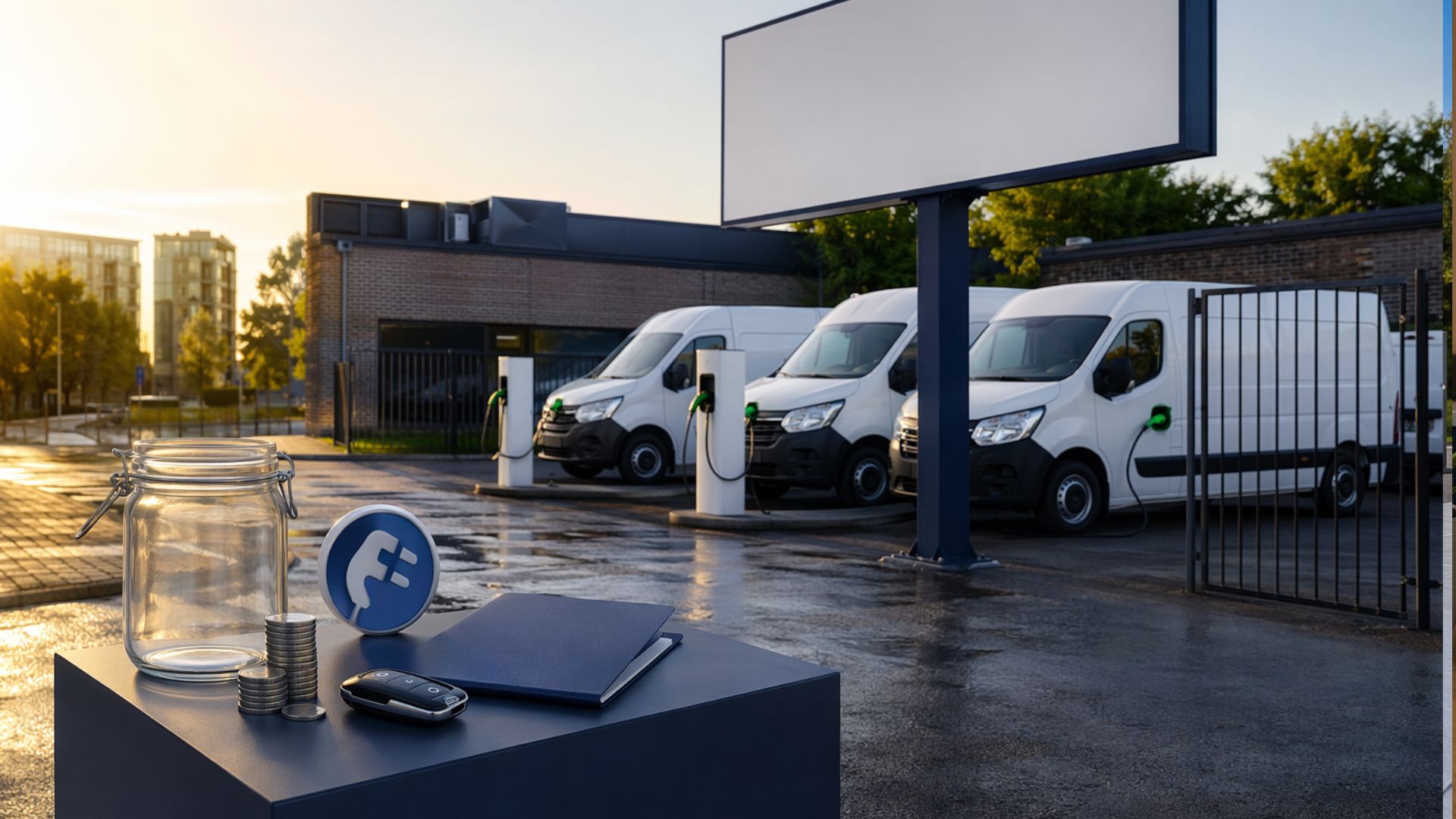
6 Top-Rated Electric Vans You Can Lease Without a Deposit: A Hippo Leasing Practical Guide
Published by Hippo Leasing, UK vehicle leasing specialists offering a wide range of cars and vans, including electric models, zero deposit agreements and options designed for drivers with less-than-perfect credit.
A Smarter Way to Go Electric for Your Business
Making the move to an electric van has never been more practical for UK small businesses, but the upfront costs have historically been a sticking point. A higher list price compared to diesel equivalents means that even a standard initial rental can feel like a significant barrier, particularly for sole traders and growing businesses managing tight cash flow. That is where zero-deposit electric van leasing comes in, spreading the full cost across your monthly payments so you can get behind the wheel without depleting your working capital on day one.
This guide from Hippo Leasing covers six of the most capable and well-regarded electric vans available on a no-deposit contract hire basis right now. Each one has been chosen for its real-world suitability, range credentials, and the kind of small business it suits best. Whether you are running deliveries around the city, calling on clients across the county, or hauling tools from job to job, there is an electric van on this list that fits the way you work.
1. Vauxhall Vivaro Electric: The Trusted All-Rounder
Built for Tradespeople Who Mean Business
The Vauxhall Vivaro Electric is one of the most popular medium vans in the UK for a reason: it combines a familiar, no-nonsense layout with genuinely competitive electric range and a payload that does not compromise on usability. Available with either a 50 kWh or 75 kWh battery, the larger option delivers up to 205 miles of WLTP-rated range, making it a serious contender for full working days without an unplanned charge stop.
The cargo area is generous and practical, with a flat floor and the option to specify bulkhead configurations, roof heights, and lengths to match your exact needs. For tradespeople such as plumbers, electricians and heating engineers, who are often carrying a mix of tools, fittings and materials across multiple jobs in a day, the Vivaro Electric offers that familiar workhorse reliability with the added benefit of lower running costs.
Charging is straightforward, with rapid DC charging capability on the larger battery allowing an 80% top-up in under an hour when using a 100 kW public charger. Combined with overnight charging at your base or home on a 7.4 kW wall box, the Vivaro Electric fits naturally into a working routine without demanding significant adjustment.
|
Key Facts |
Detail |
|---|---|
|
Battery Options |
50 kWh / 75 kWh |
|
Max Range (WLTP) |
Up to 205 miles (75 kWh) |
|
Payload |
Up to 1,000 kg |
|
Load Volume |
Up to 5.8 m³ |
|
Best For |
Tradespeople and multi-job service routes |
2. Citroen ë-Berlingo: The Compact City Specialist
Perfect for Urban Deliveries and Independent Retailers
The Citroen ë-Berlingo punches well above its size class. As one of the most compact options in this guide, it is an ideal zero-deposit choice for small businesses that spend most of their time navigating urban streets, squeezing into tight loading bays and dealing with city-centre parking restrictions. Its 50 kWh battery delivers up to 172 miles of WLTP range, which is more than sufficient for a full day of local work.
The ë-Berlingo's interior is impressively well-organised, with clever storage solutions throughout the cab and a load area that is easy to access and configure. This makes it a natural fit for independent florists, artisan food suppliers and small e-commerce retailers who are doing their own last-mile deliveries and need a van that is easy to load quickly between drops.
One of the ë-Berlingo's notable strengths is its ease of driving. It feels more like a large car than a traditional van, which reduces driver fatigue on stop-start urban routes. For business owners who are new to van driving, or who want a vehicle that any member of staff can jump into confidently, this is a real advantage.
- Zero Emission Zone exempt in most UK cities
- Compact dimensions make parking and manoeuvring simple
- Three-seat cab available for businesses that occasionally need a passenger
- Roof rails and modular storage options suit flexible loading needs
3. Renault Master E-Tech Electric: The High-Capacity Hauler
Ideal for Removals, Furniture, and High-Volume Cargo
For businesses that need genuine large-van capability without the emissions, the Renault Master E-Tech Electric is a compelling case. Equipped with an 87 kWh battery, it offers a WLTP range in the region of 124 to 155 miles depending on specification and load, and a payload that supports the heavier, bulkier cargo that demands a large panel van. Its load volume of up to 22 m³ in the longer wheelbase body puts it among the most spacious options in the electric van segment.
Small removal companies, furniture retailers offering home delivery, and businesses supplying catering or hospitality venues with bulky goods will find the Master E-Tech Electric well-suited to their operational demands. The range may be more modest than some of the medium vans in this guide, but for businesses operating predictable daily routes with overnight charging, it is rarely a limitation.
The driving experience is refined for a large van, with a smooth powertrain and good visibility that makes loading dock manoeuvres and reversing onto driveways less stressful. Renault's ProVia fleet management compatibility is also a useful feature for businesses wanting telematics and route optimisation built in from the start.
|
Key Facts |
Detail |
|---|---|
|
Battery |
87 kWh |
|
Max Range (WLTP) |
Up to 155 miles |
|
Payload |
Up to 1,400 kg |
|
Max Load Volume |
Up to 22 m³ |
|
Best For |
Furniture delivery, removals, catering supply |
4. Ford E-Transit Custom: The Modern Mid-Size Powerhouse
The Go-To Choice for Multi-Drop Courier and Logistics Work
Ford's E-Transit Custom represents a significant step forward in how a mid-size electric van can be specified and used. With a 64 kWh battery delivering up to 236 miles of WLTP range, it sits at the upper end of the medium van segment in terms of daily usability, giving courier businesses and multi-drop operators the confidence to plan full routes without range anxiety getting in the way.
The interior design is where the E-Transit Custom really earns its keep. Ford has incorporated a large central console with built-in storage, a fold-flat passenger seat with a work surface, and a 12-inch SYNC 4 infotainment screen. For delivery drivers spending long hours in the cab, these details matter, and for business owners who want to attract and retain good drivers, a well-appointed working environment is increasingly a part of the package.
The E-Transit Custom supports DC rapid charging at up to 125 kW, meaning a significant charge can be recovered during a lunch break at a public hub. This flexibility makes it particularly well-suited for regional parcel delivery businesses or trade counter logistics operations where routes may vary day to day and an extended range buffer is genuinely useful.
- Up to 236 miles WLTP range on a single charge
- Pro Power Onboard option available, allowing the van to power tools on site
- OTA software updates keep vehicle features current throughout the lease
- Ford Pro telematics integration for fleet managers and owner-operators alike
5. Vauxhall Combo Electric: The Nimble Small-Business Workhorse
The Right Size for Mobile Professionals and Service Businesses
The Vauxhall Combo Electric occupies a sweet spot for small businesses that do not need a full-size panel van but want more capacity than a car-derived van can offer. With a 50 kWh battery and a WLTP range of up to 174 miles, it handles a typical day's work for service-led businesses without any particular compromise. The payload sits around 500 kg, which covers the majority of light-trade and mobile-service use cases comfortably.
For mobile dog groomers, beauty therapists visiting clients at home, IT service engineers, or small-scale catering businesses doing event work, the Combo Electric offers a load area that is just large enough to carry professional equipment while remaining easy to park on residential streets and in standard car park bays. That combination of compact footprint and practical capacity is genuinely useful in day-to-day business life.
The Combo Electric shares much of its architecture with the Citroen ë-Berlingo, which means it benefits from the same well-proven platform reliability. Vauxhall's Flexi Cargo system in the load area, which allows the floor to be reconfigured in a matter of minutes, adds a layer of versatility that mobile professionals will appreciate when kit requirements change between jobs.
|
Key Facts |
Detail |
|---|---|
|
Battery |
50 kWh |
|
Max Range (WLTP) |
Up to 174 miles |
|
Payload |
Up to 500 kg |
|
Load Volume |
Up to 4.4 m³ |
|
Best For |
Mobile service professionals, light-trade use |
6. Mercedes-Benz eVito: The Premium Option for Client-Facing Businesses
Refined, Capable, and Built to Impress
The Mercedes-Benz eVito brings a level of refinement to the electric van space that is difficult to match at this size. Available with either a 66 kWh or 90 kWh battery, the larger option provides up to 214 miles of WLTP range and a driving experience that is noticeably quieter and more composed than many of its rivals. For businesses where the van is visible to clients or customers, arriving in an eVito sends a clear signal about the quality of the operation behind it.
Luxury goods couriers, independent wine merchants, high-end catering companies and healthcare equipment suppliers are among the businesses that will find the eVito a natural fit. The load area is practical and well-finished, and the cab environment, with its Mercedes-quality switchgear and comfortable driving position, reduces fatigue on longer days. It is a van that drivers enjoy spending time in, which has a knock-on effect on morale and care of the vehicle.
Charging on the 90 kWh variant supports DC rapid charging, and Mercedes-Benz's own digital ecosystem means the eVito integrates well with fleet management tools if you are running more than one vehicle. The eVito may carry a slightly higher monthly rate than some of the other vans in this guide, but for businesses where presentation and reliability are non-negotiable, the value proposition is clear.
- Premium cab quality on par with Mercedes-Benz passenger cars
- Low noise levels make it an excellent choice for early-morning urban routes
- Two battery options to suit varying range and payload requirements
- Strong resale values relative to the segment, supporting competitive lease rates
Making the Right Choice for Your Business
Choosing an electric van without a deposit is no longer a niche financial arrangement, and the six models in this guide demonstrate just how broad and capable the zero-deposit electric van market has become. From the compact agility of the Citroen ë-Berlingo and the Vauxhall Combo Electric to the commanding capacity of the Renault Master E-Tech and the polished refinement of the Mercedes-Benz eVito, there is a genuinely strong match for almost any small business operating in the UK today. Pairing the right van with a no-deposit lease through Hippo Leasing means you can make that transition to electric now, preserving your cash flow while benefiting from lower fuel and servicing costs from the moment you drive away.
Frequently Asked Questions
Can I Get a No-Deposit Electric Van Lease With Bad Credit?
Absolutely. Zero deposit and bad credit are handled as separate considerations, and you can combine both in a single application. Hippo Leasing works with an extensive panel of lenders who assess applications from drivers and businesses with poor credit histories, CCJs, defaults, or limited credit records. A weaker credit profile does not automatically rule out a zero-deposit electric van agreement.
Can I Put a No-Deposit Electric Van Lease Through My Business?
Yes. Provided the vehicle is used wholly or primarily for business purposes and the lease is held in the business name, monthly payments can typically be offset against taxable profits. VAT-registered businesses can usually reclaim 50% of the VAT on lease payments, rising to 100% where the vehicle is used exclusively for business. Electric vans also attract lower Benefit-in-Kind rates than diesel alternatives where applicable. It is always worth confirming your specific tax position with your accountant, as individual circumstances vary.
How Do Electric Vans Handle Cold Weather and Range?
Cold temperatures do have a measurable effect on battery performance, as lithium-ion cells operate less efficiently in low temperatures, which can reduce the available range by anywhere from 10 to 25% in very cold conditions. The practical impact is manageable for most business users: preconditioning the van while it is still plugged in before your first journey warms the battery and cabin without drawing on the driving range, and planning routes with the option to top up at a public charger adds a useful buffer on colder days. Most modern electric vans also use thermal management systems to limit the worst of this effect during everyday use.
Is a No-Deposit Electric Van Lease More Expensive Overall?
You will typically pay a slightly higher monthly amount than you would on an equivalent lease with an initial rental, since the total cost of the agreement is spread evenly across monthly payments rather than being partially covered upfront. Given that electric vans tend to have a higher list price than comparable diesel models, removing the deposit is often what makes switching to electric financially viable right now, rather than waiting years to accumulate the upfront capital.
Do Electric Vans Cost Less to Run Than Diesel Vans?
In most cases, yes. The cost of electricity per mile is considerably lower than diesel, particularly when charging overnight on a business energy tariff, and electric drivetrains have fewer mechanical components, which generally translates to lower servicing costs over the life of a lease. Electric vans are also exempt from Clean Air Zone and Ultra Low Emission Zone charges in the majority of UK cities, a saving that can be substantial for vans doing regular urban or city-centre work.
What Is the Difference Between Leasing and Buying an Electric Van Outright?
Leasing means you pay a fixed monthly amount to use the vehicle for an agreed term, typically two to four years, and return it at the end without the responsibility of selling it or managing its depreciation. Buying outright requires a larger upfront sum and leaves you exposed to the residual value risk when you come to sell. For businesses prioritising cash flow and the ability to upgrade to newer technology at the end of each term, leasing is generally the more flexible and financially efficient route, particularly for electric vans where battery technology and range capabilities continue to improve with each new model generation.
Hippo Leasing is a UK-based vehicle leasing specialist and one of the country's most established providers of zero-deposit and bad credit leasing solutions, supporting businesses and private individuals across the UK in finding the right electric vans at competitive monthly rates. To receive a no-obligation quote on any of the vehicles featured in this guide, visit hippoleasing.co.uk or speak directly with the team by phone.